




NRCE Director
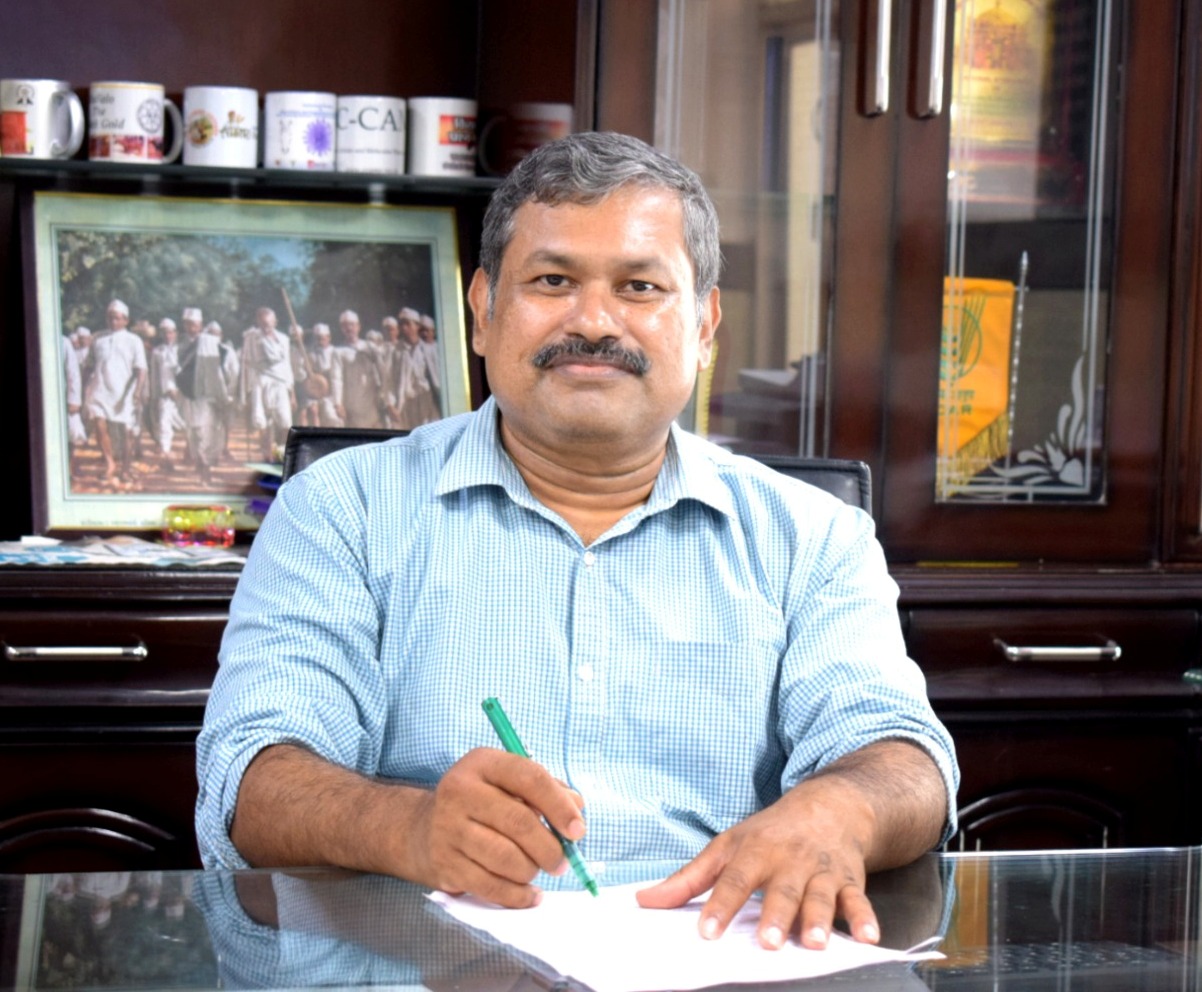
Director’s Message

Dr. Tarun Kumar Bhattacharya
Director
Welcome to ICAR-National Research Centre on Equines
It is my pleasure to welcome you to the official website of ICAR-National Research Centre on Equines, Hisar. ICAR-NRCE has been playing an important role as a technical leader in the development of the equine sector by initiating efficient research and development activities in equine health and production.
NRCE is the only institute in the country responsible for research on equine production, health, management and husbandry. Its activities include disease surveillance and monitoring, diagnosis, prevention, reproduction, nutrition, feeds and fodder, development of value-added products, management practices, policy planning and awareness generation among stakeholders about equine husbandry and bio-security.
Potential of the Equine Sector
Despite the decreasing population of equines in India, their economic impact remains appreciable. There is tremendous potential for the growth and development of equines in the country. Donkeys and mules continue to serve as important working animals, especially in hilly and difficult terrains.
Research Facilities
The main campus of the Centre at Hisar, Haryana, has state-of-the-art laboratories and facilities for undertaking research in all areas of equine health. The sub-campus at Bikaner, Rajasthan, undertakes research on equine production, including conservation.
Major Achievements
ICAR-NRCE has landmark achievements in the development of diagnostics and prophylactics for major equine diseases. It undertakes nation-wide monitoring and surveillance of equine infectious diseases to manage, control and eradicate diseases.
- The Centre’s continuous surveillance programme established that equines in India were free from African Horse Sickness, and in 2014, India was declared AHS-free.
- The Centre has successfully controlled re-emerging diseases such as glanders and equine influenza in the recent past.
- ICAR-NRCE has been recognized as a National Referral Centre for the diagnosis of important equine infectious diseases, including exotic diseases.
- The Centre has worked towards characterization of different equine breeds and finalized the breed descriptor for Marwari horses for registration into the stud book.
- Cryopreservation of semen and artificial insemination technology have been perfected to augment the production of superior quality Marwari horses, mules and donkeys.
International Recognition and Accreditation
The Centre is undertaking research projects in leading areas of equine health and production, including externally funded projects. It is in the process of attaining OIE International Reference Laboratory status in the fields of equine piroplasmosis, equine influenza and glanders through twinning with international laboratories in Japan, the United Kingdom and Germany. The Equine Piroplasmosis Laboratory has also been accredited as per NABL ISO:17025-2005 guidelines.
National Centre for Veterinary Type Cultures
The National Centre for Veterinary Type Cultures (NCVTC) was established in June 2005 and serves as a national repository of microorganisms of animal origin from different regions of the country. The microbial repository currently has more than 4000 accessioned animal microbes.
NCVTC is supported by 14 network units across the country and serves as a biological resource for the present generation as well as posterity. It is committed to enhancing livestock production and productivity, food safety and nutritional security, efficient utilization of resources, reduction of methane production by livestock, and sustaining animal, human and ecosystem health.
I am confident that with the dedicated cadre of the scientific community, we will continue to contribute to the rich scientific legacy of NRCE and outshine nationally and globally in the years ahead.
I invite you to our campus and look forward to your company as our joint partner in the inclusive progress of the nation.